2 Minutes of Heartbreak! A Guard Rushes Into the Palace With Urgent News — William Calls a Secret Meeting, Tearfully Announces: ‘Oh My God… Andrew Has…’”


2 Minutes of Heartbreak! A Guard Rushes Into the Palace With Urgent News — William Calls a Secret Meeting, Tearfully Announces: ‘Oh My God… Andrew Has…’”
Prince William’s Calculated Step: Addressing the Prince Andrew Situation
The British Royal Family has long operated on the principle of discretion—a culture where internal matters are shielded from the public gaze as much as possible. However, a recent development involving the Prince of Wales, Prince William, has signaled a definitive shift in how the monarchy handles its most controversial figures. Reports indicate that Prince William has taken a proactive role in addressing the status of his uncle, Prince Andrew, Duke of York, marking a pivotal moment in the modernization of the House of Windsor.
The Shift in Leadership
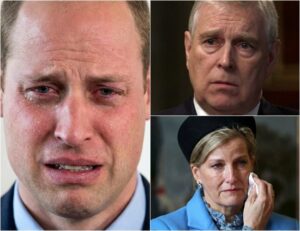
For years, the issue of Prince Andrew’s role within the institution has been a source of significant public criticism and internal tension. Following the Duke of York’s withdrawal from public life and the subsequent loss of his honorary military titles and patronages, the question of his future involvement in royal life has remained a lingering, unresolved issue.
Prince William’s intervention—stepping in to formalize and clarify the limitations on Andrew’s public presence—is widely viewed as a direct move by the future King to exert his influence. It is a departure from the more passive approach taken during the late Queen’s final years. By clearly delineating the boundaries of what is acceptable for non-working royals, William is establishing a new standard of accountability for the family.
Prioritizing the Monarchy’s Reputation
The announcement, according to palace insiders, emphasizes that the dignity of the Crown must come before personal family loyalty. William’s stance is pragmatic: he understands that the institution’s survival in the 21st century depends heavily on public trust. By effectively “closing the door” on a return to public duty for his uncle, William is attempting to insulate the monarchy from further association with past scandals.
This decision also signals a consolidation of power. It serves as a clear message that the Prince of Wales is not merely waiting for his turn to ascend the throne; he is actively shaping the parameters of the institution he will one day lead. It reflects a shift toward a more streamlined, professionalized monarchy where the public’s perception is paramount.
Public and Internal Reaction
The reaction to William’s firm stance has been largely supportive among those who believe the monarchy needed to distance itself decisively from the controversy surrounding Prince Andrew. Supporters view this as a sign of strength and moral clarity from the heir to the throne.
However, the internal family dynamic is undoubtedly complex. Striking a balance between maintaining the institution’s integrity and handling the delicate, private nature of family relations is one of the most difficult challenges any royal faces. William’s move is not without personal cost, but it underscores his willingness to make difficult decisions for the sake of the Crown’s future.
Looking Ahead
As Prince William continues to refine his role, this decision regarding Prince Andrew will likely be cited as a defining moment in his transition to leadership. It is a clear statement that the “new” monarchy will not tolerate ambiguity when it comes to the reputation of the institution.
Ultimately, this development suggests that under Prince William’s future reign, the monarchy will operate with a greater sense of transparency and adherence to public expectations. It is a pivot away from the old guard’s silence and toward a more accountable, modern version of royalty—one that is prepared to cut ties in order to ensure its own long-term viability.