Prince Edward’s Farewell to Buckingham Palace: A Quiet Goodbye That Speaks Volumes
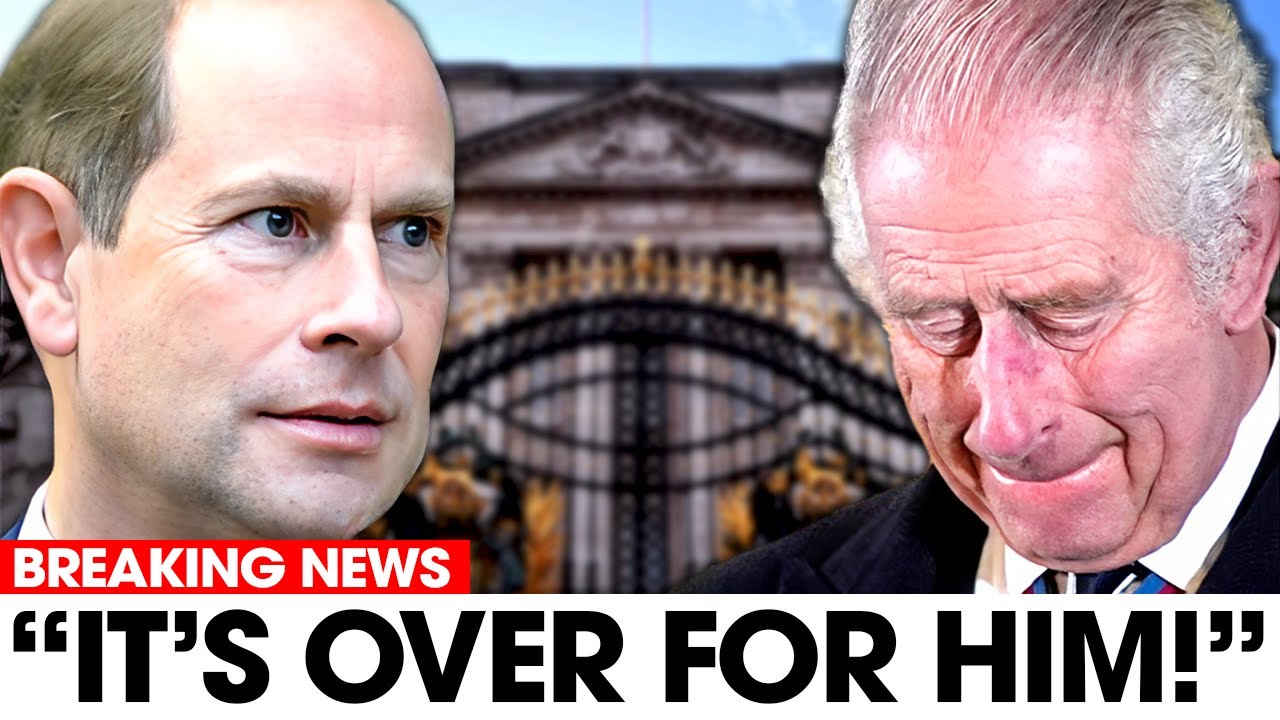
It is not often that the walls of Buckingham Palace tremble with quiet surprise. Yet in recent weeks, whispers turned into headlines when Prince Edward, the youngest son of Queen Elizabeth II and Prince Philip, revealed his decision to step back from life at the Palace.
“It’s been a bit of a shock,” Edward admitted, his words carrying a mixture of sorrow and resolve. “However much one tries to prepare oneself for something like this, it’s still dreadful. We’re still trying to come to terms with it — and it’s very, very sad.”
For a man who has never courted the spotlight as eagerly as some of his siblings, Edward’s farewell has stunned the Royal circle and beyond. What drives a prince, born in the heart of Britain’s monarchy, to turn away from the very place that defined him?
A Prince Unlike the Others
Born at Buckingham Palace on March 10, 1964, Edward always stood apart. While his brothers, Charles and Andrew, marched through military careers steeped in tradition, Edward quietly chose another path — history at Cambridge, a flirtation with theatre, and eventually a career in media.
He never seemed destined to be a soldier or a kingmaker. Instead, Edward appeared most at home behind the curtain rather than center stage. In 1993, he founded Ardent Productions, a small media company — an unusual choice for a royal, and one often ridiculed in the press. Critics called him a dreamer, even a failure. But to Edward, it was proof that he would not simply bow to expectation.
That quiet defiance carried into his personal life. In 1999, Edward married Sophie Rhys-Jones, now Duchess of Edinburgh. Their marriage has weathered time with dignity and devotion, unlike so many of his siblings’ fractured unions. Together, Edward and Sophie have lived not in London’s golden fishbowl but at Bagshot Park in Surrey, raising their children away from the blinding glare of the monarchy’s spotlight.
His First Goodbye: Walking Away From the Marines
This was not Edward’s first farewell. In his early twenties, he shocked the Royal establishment by resigning from the Royal Marines after only four months of training. His father, Prince Philip — the very embodiment of military tradition — was said to be furious.
But Edward held firm. He would not, he declared, live a life “trapped” in a role that was not his own. For the young prince, authenticity outweighed tradition. It was a choice that earned him ridicule from some, but also admiration from a public beginning to understand that even royals are, in the end, human.
A Second Farewell: Leaving the Palace Behind
Now, decades later, Edward has done it again. His departure from Buckingham Palace is less dramatic than Harry and Meghan’s California escape, but perhaps more telling. This is not a rejection of duty — Edward remains active in his royal patronages, especially the Duke of Edinburgh’s Award, the program his father founded. Nor is it a loud break with the monarchy. Instead, it is something subtler, something quieter: a decision to live and serve on his own terms.
Those close to the family whisper that Edward’s move reflects both practicality and principle. King Charles III is determined to streamline the monarchy, trimming its excesses for a modern Britain. Edward, ever the loyal brother, may see his exit from Palace life as a way of supporting that vision. Others suggest something more personal — a longing for privacy, for family, for freedom after six decades under the crown’s shadow.
The Weight of Royal Life
For those who have never lived within the gilded cage of monarchy, it can be difficult to grasp the toll it takes. Every smile rehearsed, every misstep magnified, every choice debated by strangers. For Edward, the youngest, the “spare’s spare,” the pressure was both constant and invisible.
He has spoken of his dislike for media intrusion, his desire to shield Sophie and their children from the relentless gaze. Unlike Diana, who turned her vulnerability into a kind of defiance, or Harry, who has battled openly with the institution, Edward’s rebellion has always been quieter. He simply steps away.
In doing so, he embodies something deeply relatable. Who among us has not longed, at some point in our lives, to walk away from duty, from expectation, from the noise — and choose instead a life built on peace?
A Legacy Still Unwritten
Edward’s decision will not topple the monarchy, nor will it dominate global headlines in the way Diana’s tragedy or Harry’s accusations have. Yet it matters. It signals that even within the most traditional of institutions, there is room for humanity, for choice, for the simple yearning to live life differently.
In stepping back, Edward reminds us that legacy is not built only in crowns or ceremonies. It is also built in love, in loyalty, in the quiet courage to follow one’s own path.
Buckingham Palace will endure without Prince Edward. Its walls have outlasted abdications, divorces, scandals, and even wars. But the absence of the Queen’s youngest son will be felt, not as a political earthquake but as a deeply human moment — a reminder that beneath the titles and traditions, even princes crave freedom.
A Question for Us All
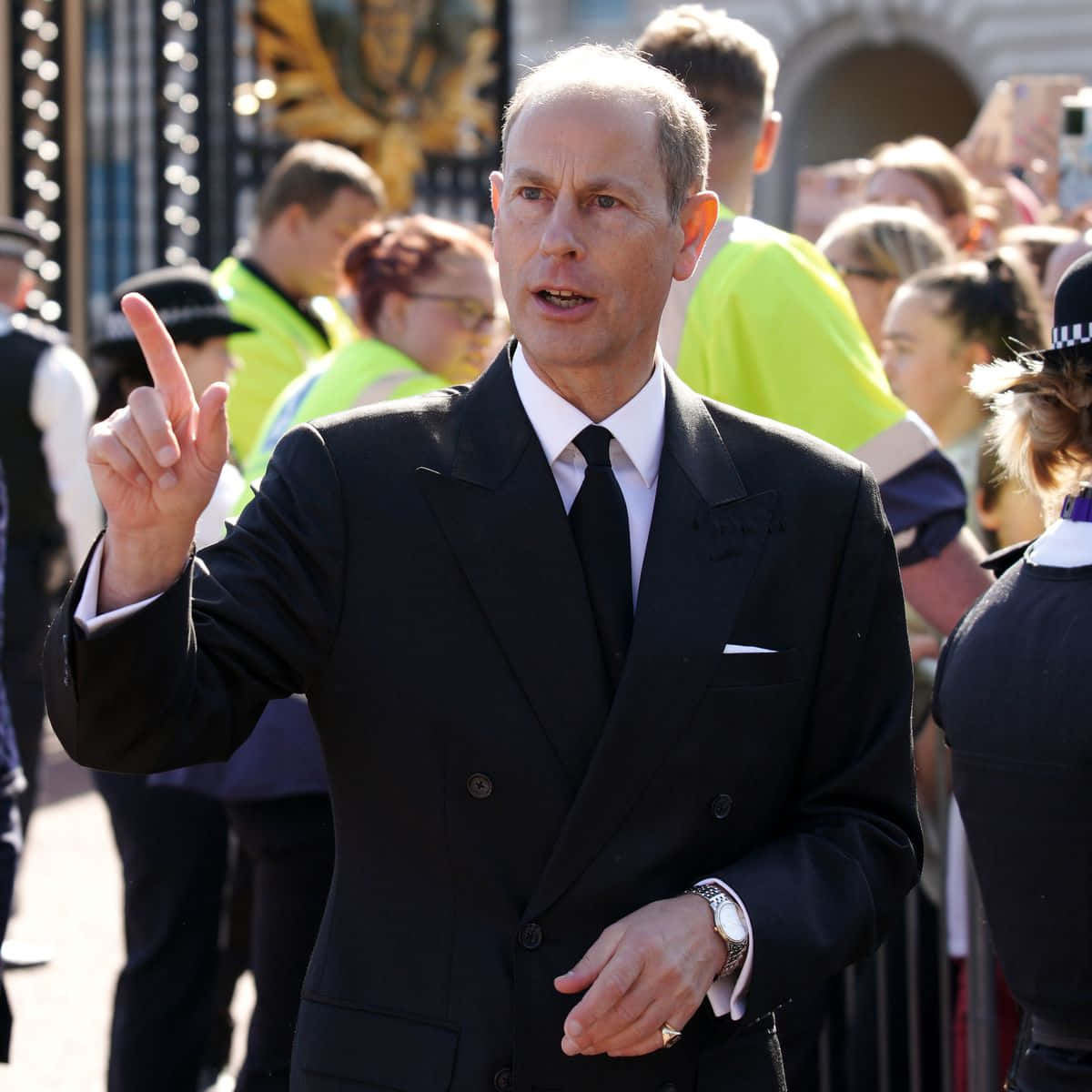
As Edward turns the page, one can’t help but wonder: what would we do in his shoes? Would we cling to tradition, no matter the personal cost? Or would we choose, as he has, to walk away from the palace gates and seek a different kind of life?
Perhaps that is why this quiet farewell resonates so deeply. It is not just a royal story. It is a human one. And like all human stories, it asks us to look inward — at the choices we make, the lives we build, and the courage it takes to say goodbye.