Charles Shamed Diana at the Dinner — What the Queen Did BROKE Everyone

Charles Shamed Diana at the Dinner — What the Queen Did BROKE Everyone
Charles Shamed Diana at the Dinner — What the Queen Did BROKE Everyone
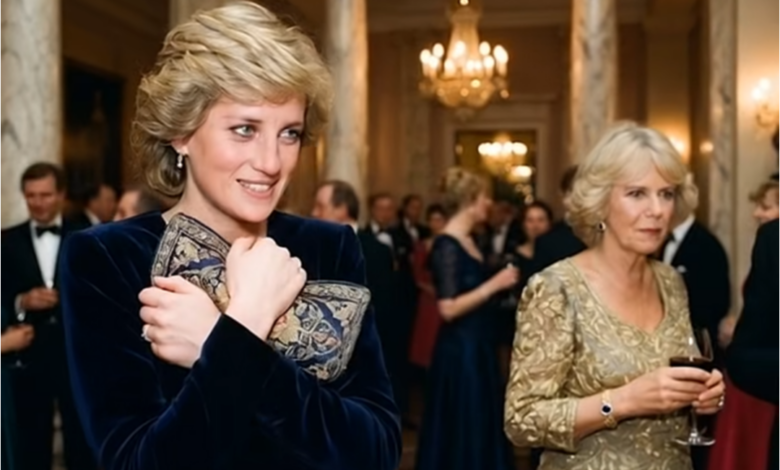
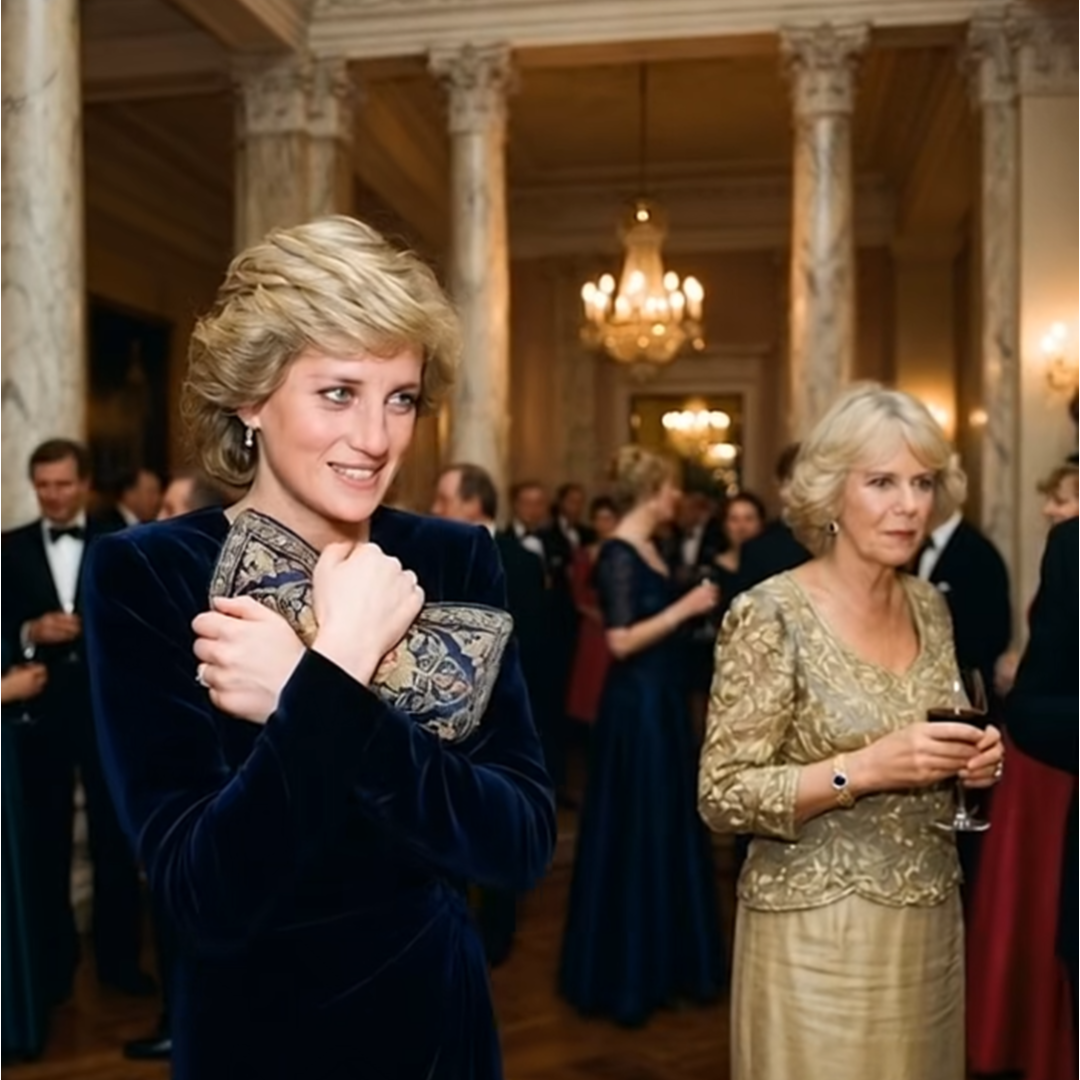
In November 1987, the East Wing of Buckingham Palace was decorated for the occasion in the way only Buckingham Palace knows how. Not with effort, but with the casual authority of a place that had been hosting heads of state for three centuries and had long ago ceased to be impressed by its own grandeur.
The chandeliers were lit. The long dining table had been set with the precision of a military operation. 81 guests, four courses, two orchestras—one for dinner and another for the dance that would follow in the adjacent room. The occasion was a state dinner for the visiting president of a country whose relationship with Great Britain had been carefully cultivated for decades and, at certain moments, demanded exactly this kind of event.
The silver, the crystal, the measured warmth of a monarchy that understood its function as much as a spectacle as a government. Diana arrived early, which was unusual. In recent months, she had been making small adjustments to her habits. Arriving before the room filled up, she positioned herself in a way that she had all the available space to read, rather than just a corner.
She had learned, through years of practice, that the most useful information did not come from listening attentively, but from observing freely. And you could only watch freely if you arrived before everyone else and chose your place. She was near one of the tall windows overlooking the gardens. The outside light was fading.
She wore a deep sapphire blue dress, a color she had deliberately chosen, the color of serenity. And the room, as it filled up around her, organized itself the way rooms always organize themselves around her presence. The conversation shifted slightly. Eyes moved and turned away. She was already used to this.
She knew how to be admired. It took years to learn the difference between being seen and being observed. And she learned it the hard way. Charles arrived 20 minutes later. This was also noted. He was in full formal attire, with medals, sash, all the impressiveness of royal dignity.
He entered the same way he always entered rooms. Not dramatically, but with the ease of someone who had been frequenting important rooms since childhood and never questioned whether he belonged there. Camilla Parker Bowles was not one of the guests that night. She was not on the official list. She arrived at seven-thirty through a side entrance that bypassed the main receiving line, linked to a group that had legitimacy, visible enough to be in the room without being visible enough to demand recognition.
Diana noticed her the instant she entered. She noticed how Charles’s posture changed, minimally, almost imperceptibly, the slight recalibration of a body that registered something it desired. She noticed how his eyes scanned the room in the first few minutes after Camilla’s arrival. Not lingering, not obvious, but moving the way eyes move when they resist the attraction of something and cannot completely overcome it.
She had been observing these small adjustments for years. She was already very good at it. What happened at eight-twenty was not dramatic. At first glance, it didn’t look like anything. Charles crossed the room to speak to a group that was near the other end of the table. Camilla was standing at the edge of that group.
He conducted the conversation pleasantly, appropriately, and entirely correctly. And as he passed her, he handed her a glass of champagne, a gesture so common that no one watching would attribute any meaning to it, the kind of thing a host does a dozen times a night, except for the fact that he had taken the glass from a passing tray and carried it across the room to hand it specifically to her.
And his hand, as he handed it to her, covered hers for an instant. It didn’t last long, less than a second. But in a room with 81 people and 162 eyes, some of which were professionally trained to observe exactly this kind of moment, that was enough. Diana did not look away.
She had stopped looking away from these things. She remained in her place by the window, watching, and her facial expression remained exactly as it should be. Pleasant, serene, present, because she had learned that serenity was not the absence of feeling. It was a choice to maintain privacy.
And she had become very good at making that choice. What she hadn’t seen was who else had noticed. Queen Elizabeth II was standing near the center of the room, talking to the wife of the visiting president, a woman of considerable intelligence and charm, who demanded and received the Queen’s genuine attention. The conversation was real, entirely real, and Elizabeth gave herself completely to it.
But she had also seen the glass of champagne. She had also seen the hand. She had been looking after her son for 20 years. She had been watching his marriage for six years. She knew what she had just seen. In fact, she had known for some time what she had just seen. This night simply made it visible in a way that the room, if it so wished, could interpret. She continued the conversation.
She revealed nothing. Her expression did not change. She said something that made the president’s wife laugh, and she smiled, and continued for the next 40 minutes with the same serenity and cordiality she showed at every event. She watched. She thought. And when the dinner plates were cleared, she had already made a decision so quietly that no one in the room noticed the moment she made it.
The dinner proceeded. Four courses, two wines, the meticulous choreography of a State meal executed with the professionalism of a family that has been doing this longer than most nations have existed. Diana sat in her designated seat. She ate. She talked to the guest next to her with the ease and sympathy that had made her, over the years, the most naturally talented public figure in the royal family.
People loved talking to her. She made them feel, in a way that wasn’t staged, but genuine attention, that they were the most interesting person in the room. It was one of the things about her that Charles had stopped noticing. After dinner, the environment transformed into a space for dancing.
The second orchestra positioned itself in the ballroom. The night entered its second phase, less formal, more fluid, the kind of hour when rank and precedent become a little more flexible, and the evening turns into something more like an actual occasion. The tradition at state dinners of this kind was that the first dance, the opening step, before the floor was opened to the guests, would be led by the most senior member of the royal family and their chosen partner.
It wasn’t written anywhere, but it had been done this way since time immemorial, and traditions over time become indistinguishable from requirements. Charles was the most senior member of the royal family after the Queen herself, who did not dance at State events. The expectation, understood by everyone in the room, by the orchestra, by the staff, and by the guests, was that Charles would lead the first dance with his wife.
This was the moment Elizabeth chose. She did not raise her voice. She made no announcement. She simply moved with the calm and determination of a woman who understood that every step she took in a room like that carried weight in relation to Diana. Diana was near the entrance to the ballroom, talking to two of the wives of members of the visiting delegation.
She looked up as the Queen approached. Her expression showed the slight shift she always displayed when Elizabeth approached her in public. Composed, attentive, with the professional warmth of a woman who had learned to demonstrate naturalness, regardless of whether she felt it or not. Elizabeth took her arm delicately, like someone taking someone’s arm without asking for permission, but offering something.
“Come with me,” the Queen said in a low voice, not as an order, something between an invitation and a statement. They walked together toward the center of the ballroom, not hurriedly. The Queen moved with the serene certainty of someone for whom the room had always waited and who never needed to rush to prove it.
The orchestra conductor looked up. He saw the Queen and Diana speaking together. He saw, behind them, Charles standing quite still near the entrance to the ballroom. The expression on his face as he did something he could not control quickly enough. The conductor raised his baton. The music began. Elizabeth led.
Of course, she led. She was the Queen. She had been leading things since before most people in that room were born. And she did it now with the same quiet mastery she demonstrated in everything she did. Not with ostentation, but with the simple and absolute confidence of a woman who knew exactly what she was doing and why.
Diana followed. And, following that example, being the person the Queen chose to accompany on that floor, in that room, before 81 guests and with her husband standing at the edge, holding a glass from which he had forgotten to drink, she was placed somewhere. Without being asked, without being invited, she was placed by Elizabeth herself in the center of the room, in the first position of the night, in the place that belonged to Charles and which the Queen simply took from him and delivered to herself.
It lasted 3 minutes. The first dance always lasted 3 minutes. A tradition as precise as everything else in that house. Three minutes of music, with the Queen and the Princess of Wales in the center of a gala ballroom, while 81 guests watched and a husband stood at the edge holding a glass from which he had forgotten to drink, with no way to react.
When the music stopped, Elizabeth leaned slightly toward Diana, just enough to maintain the small distance that separated the two women, close enough so that no one else could hear. She said something. Diana’s expression changed, but not drastically. A small shift.
That kind of relief that comes when something you were waiting to hear is finally said out loud and the feeling is bigger than you imagined. She answered something, in the same voice. Her eyes filled with tears for an instant. Elizabeth nodded once. Then, she briefly took Diana’s hand in a formal manner, let it go, and turned to welcome the guests to the ballroom.
The night continued. No scene had been made. Nothing was said in any voice that could be heard in the room. The gala dinner ended appropriately. The toasts, the farewells, the careful warmth of an occasion that achieved its purpose. The family began the long process of restoration. Charles found a moment at the end of the night to talk to his mother.
He started to say something. She let him start. She waited until he had committed himself enough to the sentence that he could no longer turn back. Then she looked at him. Neither anger, nor coldness, something more precise than either of those two things. With the expression of a woman who has made a decision and is informing you about it, rather than asking for your opinion.
“The night went well,” she said, and walked away. He was alone in the screening room. Around him, the last guests were collecting their coats. The orchestra was putting away their instruments. Near the window, a staff member was folding a tablecloth with the efficiency of someone who had learned not to comment on what they witnessed.
Charles looked in the direction where Diana had been. She had left. She had left early, something she had begun to do and that he had noticed without understanding what it meant. Now he understood. He stood there for another instant, with the glass still in his hand, and thought about three minutes of music. About the choice of who would stand in the center of the room, taken from him without prior notice, without a word addressed to him, by his mother, who had seen everything, who had always seen everything, and who had waited until the exact moment. No accusation was made.
No confrontation was staged. The night had been, in every observable aspect, exactly as it should have been. And yet, in three minutes of music, in a silent walk across the ballroom, everything had been said. Diana drove back to Kensington Palace in the darkness.
A staff member who saw her arrive noted, years later, that she looked different that night. Not exactly happy, but close to being resolved. The look of someone who had carried a question for a long time and, finally, received an answer. She never commented on what the Queen had said on the dance floor. She carried it the same way she carried everything.
Silently. But she kept it. Every word. In the worst nights that followed, and there were many in the years before the separation, before the public collapse of everything she had been asked to be, she returned to those three minutes. To the raised baton. To the hand that was taken without being asked. To the center of a room.
Not as a gesture, but as a declaration. You belong in this place, and I am the one saying it.