Princess Diana Struggled After William’s Birth – What Queen Elizabeth Said Next Changed Everything

Princess Diana Struggled After William’s Birth – What Queen Elizabeth Said Next Changed Everything

Princess Diana Struggled After William’s Birth – What Queen Elizabeth Said Next Changed Everything
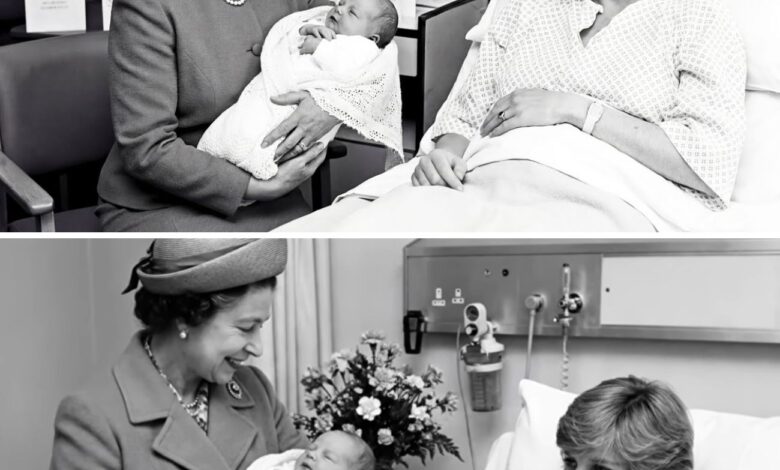
On 21 June 1982, a photograph captured a moment that seemed to symbolize happiness, continuity, and royal unity. Millions of people around the world saw Queen Elizabeth II standing beside Princess Diana at St. Mary’s Hospital in London, proudly holding the newborn Prince William. Diana smiled warmly from her hospital bed, and the image quickly became one of the most famous royal photographs of the twentieth century.
To the public, it looked like a simple celebration of a new heir to the throne.
What nobody knew was that only hours earlier, fear and uncertainty had filled the hospital corridors. Behind the smiles was a deeply emotional story that would shape the future of the royal family for years to come.
Diana’s pregnancy had been difficult from the beginning. At only twenty years old, she was still adjusting to married life and the intense pressures of royal expectations. Constant public attention, strict traditions, and growing tensions within her marriage left her emotionally exhausted.
Throughout the pregnancy, she struggled with anxiety and self-doubt. She worried constantly about becoming a mother while living under the scrutiny of the world. Friends later recalled how often she questioned whether she was truly suited to royal life.
When labour began on the evening of 20 June, everyone expected a routine delivery. Diana was admitted to the private Lindo Wing of St. Mary’s Hospital, where doctors, nurses, and royal aides waited for the arrival of the future king.
At first, everything appeared normal.
Then complications arose.
During delivery, concern spread through the medical team when the baby showed signs of distress. Doctors moved quickly, making urgent decisions to ensure the child’s safety. For a brief but terrifying period, everyone in the room feared the worst.
Finally, shortly after nine o’clock in the evening, Prince William arrived safely.
Although the crisis passed, Diana knew little of what had happened. Exhausted and frightened, she became convinced something was terribly wrong. She had not immediately heard her baby cry and feared she had somehow failed.
As doctors focused on caring for the newborn prince, Diana’s anxiety spiralled.
She wept uncontrollably, convinced she had disappointed the royal family. In her distress, she worried that she was too young, too fragile, and too inexperienced for the role that had been placed upon her shoulders.
The nurses caring for her became increasingly concerned.
Recognising the seriousness of her emotional state, they contacted Buckingham Palace and requested assistance. What happened next was highly unusual.
Late that evening, Queen Elizabeth quietly arrived at the hospital.
There were no photographers and no public announcement. The Queen first visited the nursery to see her grandson before asking to meet Diana privately.
The young princess expected criticism.
Instead, she received something entirely different.
When the Queen entered the room, Diana was overwhelmed with emotion. Through tears, she apologised repeatedly.
“Your Majesty,” she sobbed, “I’m so sorry. I’ve failed.”
The Queen listened quietly.
Then she sat beside Diana and took her hand.
According to later accounts, the conversation that followed became one of the most important moments in Diana’s life.
The Queen reassured her that she had not failed. She reminded her that William was safe and that she had already shown remarkable courage.
For the first time since joining the royal family, Diana felt truly heard.
Months of fear and uncertainty poured out. She spoke honestly about her loneliness, her worries about motherhood, her struggles with royal expectations, and her fears about raising a child in such an unusual environment.
“I don’t know how to do this,” she confessed.
The Queen’s response surprised her.
Rather than offering formal advice, Elizabeth spoke as a mother.
She acknowledged the pressures Diana faced and admitted that royal life often demanded difficult sacrifices. Then she made a promise.
“You will not face this alone,” she told her.
The words brought Diana immediate comfort.
The Queen assured her that protecting William’s future would remain one of her highest priorities. She promised that both mother and child would have her support whenever they needed it.
For Diana, who often felt isolated within palace life, those words meant everything.
The following morning, the famous hospital photograph was taken.
To the world, it showed a proud grandmother welcoming her first grandson.
To Diana, it represented something far deeper.
It was a reminder that she had found an ally.
Over the years that followed, the relationship between Diana and the Queen remained complicated, but there were many moments when Elizabeth quietly stepped forward to help.
After Prince Harry’s birth in 1984, Diana faced significant emotional challenges. Motherhood brought joy, but it also intensified existing pressures.
Rather than drawing attention to Diana’s struggles, the Queen encouraged her to take time for herself and focus on her well-being.
Whenever possible, she ensured that Diana had private time with her sons away from public obligations.
The Queen understood something important.
William and Harry needed more than royal training.
They needed a mother.
As the boys grew older, Diana became determined to give them experiences beyond palace walls. She wanted them to understand ordinary life and develop compassion for people from every background.
Many of her choices broke with royal tradition.
Yet despite occasional disagreements, the Queen often allowed Diana greater freedom than previous generations of royal mothers had enjoyed.
Their relationship was never perfect.
There were periods of tension, misunderstandings, and disappointment on both sides. The breakdown of Diana’s marriage to Prince Charles placed enormous strain on the entire family.
Nevertheless, Elizabeth continued to recognise Diana’s importance in William and Harry’s lives.
When the marriage finally ended, protecting the well-being of the two young princes remained a priority.
As public interest in Diana intensified during the 1990s, the pressure became relentless.
Every appearance generated headlines.
Every private difficulty became public discussion.
The scrutiny would have overwhelmed almost anyone.
Yet Diana remained devoted to her sons.
She worked tirelessly to ensure they felt loved and supported despite the turmoil surrounding them.
Then came the tragedy that changed everything.
On 31 August 1997, Diana died in Paris.
The loss shocked the world.
Millions mourned a woman they felt they knew personally. Flowers filled the streets outside royal residences. Television broadcasts were interrupted. Public grief reached extraordinary levels.
In the days immediately following her death, criticism fell heavily upon the royal family.
Many questioned the Queen’s decision to remain at Balmoral with William and Harry rather than immediately returning to London.
At the time, some interpreted her actions as distant.
The reality was more complicated.
Elizabeth believed her grandsons needed privacy.
They had lost their mother in circumstances that no child should ever experience. Before they could face public expectations, they needed time to grieve as sons.
The Queen chose to place their emotional needs first.
She shielded them from overwhelming media attention and tried to create a protective space around them during the darkest days of their lives.
Eventually, she addressed the nation and paid tribute to Diana with warmth and sincerity.
Her words reflected not only respect for the Princess of Wales but also compassion for the two young boys left behind.
In the years that followed, William and Harry gradually built their own lives.
The Queen remained a constant presence.
She encouraged their education, supported their personal growth, and helped ensure they were prepared for the responsibilities ahead.
As adults, both princes often spoke about the importance of family support during difficult times.
William, in particular, embraced many of the lessons he learned from both his mother and grandmother.
As a father himself, he has consistently emphasised the importance of protecting his children’s privacy, creating a stable home life, and placing family well-being above public expectations whenever possible.
Looking back, that famous photograph from June 1982 captures more than a royal birth.
It preserves a moment when two very different women found common ground.
One was an experienced monarch carrying the weight of duty.
The other was a frightened young mother searching for reassurance.
Behind the camera flashes and newspaper headlines existed a private conversation rooted in compassion, understanding, and responsibility.
The public saw a smiling Queen holding her grandson.
What they could not see was the promise behind that smile.
A promise to support a young mother struggling under extraordinary pressure.
A promise to protect two boys who would one day carry the future of the monarchy.
And a promise that, in many ways, continued long after Diana herself was gone.
History often remembers grand ceremonies, public speeches, and official photographs.
Yet sometimes the moments that matter most happen quietly, behind closed doors, when no cameras are present.
The story of that hospital room reminds us that leadership is not always expressed through authority. Sometimes it is revealed through kindness.
And sometimes a few words of comfort offered at exactly the right moment can shape the lives of generations to come.
That is why the photograph from June 1982 remains so powerful today.
It does not simply show the birth of a future king.
It captures the beginning of a promise—one built on protection, loyalty, and the enduring belief that family must come first when it matters most.