Princess Diana Was Told to Stay Silent During Dinner — Her Response Left King Charles III Speechless

Princess Diana Was Told to Stay Silent During Dinner — Her Response Left King Charles III Speechless
Princess Diana Was Told to Stay Silent During Dinner — Her Response Left King Charles III Speechless
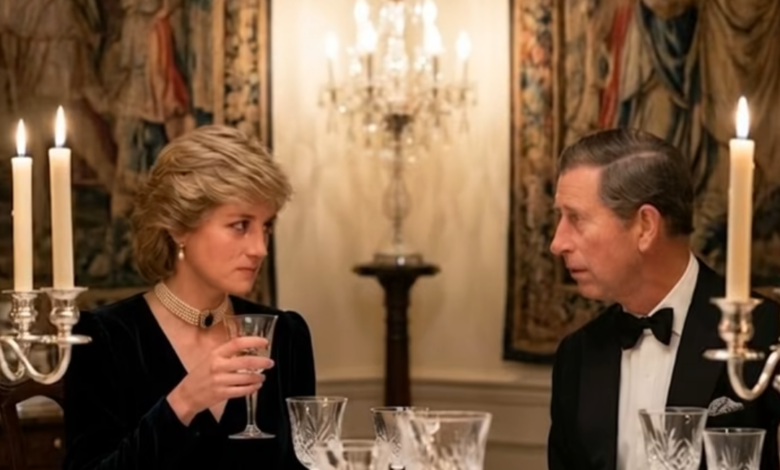
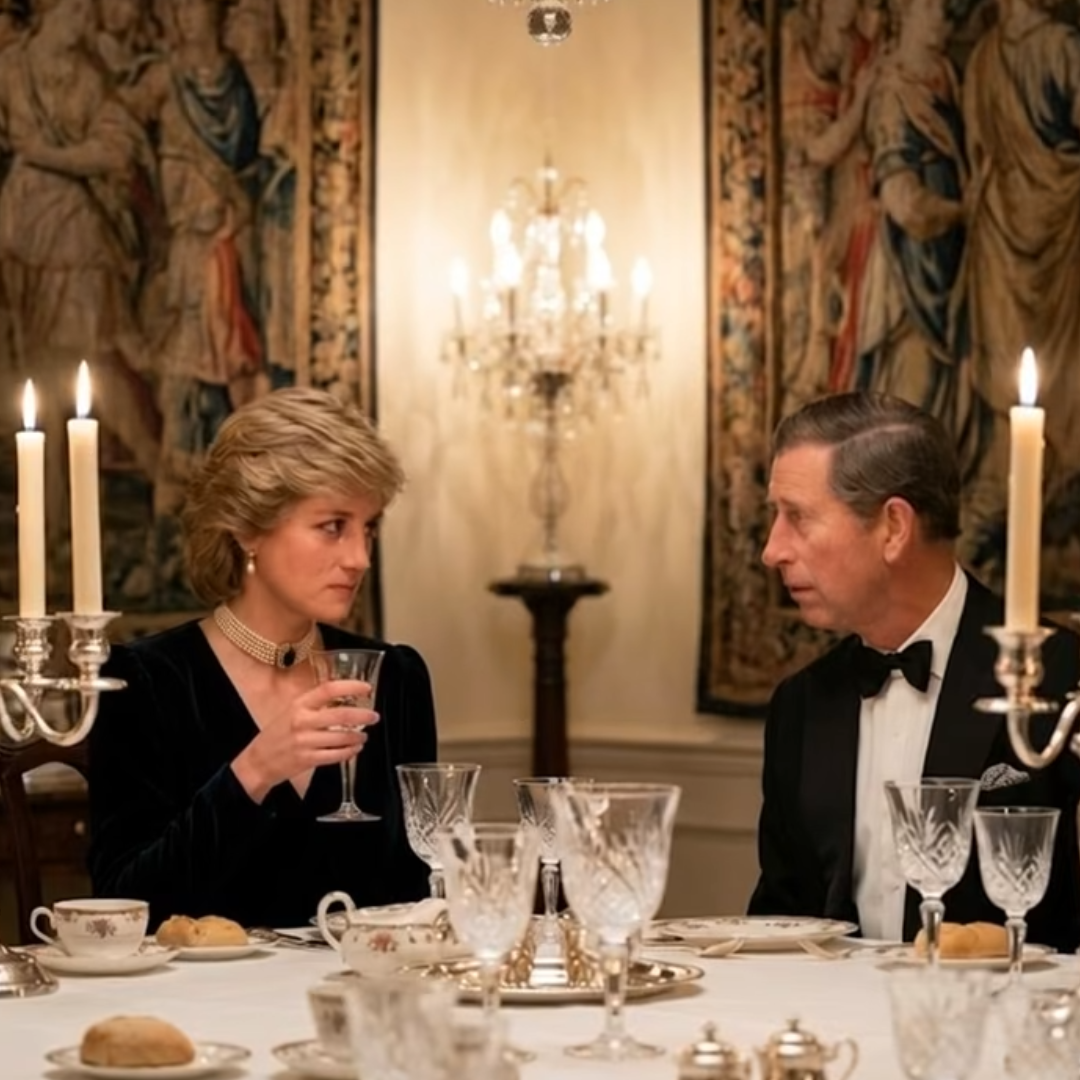
The dining room at Highgrove was set for 12 people. Crystal glasses caught the light from a chandelier that had been hanging there since the reign of George V. Every fork was positioned at the precise angle dictated by royal protocol, 1.9 cm from the edge of the table. Diana arrived 7 minutes early.
She almost never arrived early. She chose a chair at the end of the table, not her usual seat, and said nothing to the footman who pulled it out for her. She simply sat down, adjusted her napkin on her lap, and looked in the direction from which Charles would eventually appear. What she carried with her that night, what she had decided even before entering that room, would only become clear much later during the meal.
And when it did, the silence that followed was not the kind of silence anyone at that table expected. Because Diana had been told, in terms that left no room for interpretation, that that night was not her night to speak. And she agreed. What she did, instead, was something for which no one in that room was prepared.
It was the autumn of 1986, or perhaps 1987. Accounts from former staff diverge as to the exact year, and no one present that night ever officially confirmed a precise date. What several sources described in separate interviews, conducted years apart, was the atmosphere. And on this, everyone agrees.
By the mid-1980s, Highgrove House, in the Cotswolds, had become a stage, not a home. The gardens that Charles had cultivated with such obsessive devotion were immaculate. The hedges were sculpted into geometries that nature had never imagined. The house itself was filled with paintings borrowed from the royal collection, antique furniture with a faint smell of beeswax, and centuries of history.
Everything on the property conveyed permanence, tradition, and control. Dinners at Highgrove were not casual events. They were carefully choreographed exercises in subtle diplomacy. Guest lists were drawn up weeks in advance. The seating arrangement was debated, revised, and debated again.
There were always reasons behind the choice of seats: political alliances to be reinforced, social debts to be paid, old friendships to be maintained for the sake of appearances. That particular night, the guests included a small group of prominent figures. Some belonged to Charles’s circle of advisors, others were linked to various charity boards.
According to a former member of the domestic staff who later spoke to a biographer, there was also a woman present who was not on the original guest list. Her name was added later, in pencil, in handwriting that was not the butler’s. Diana noticed this. She noticed every detail of the seating arrangement because, over the years, she had learned to read these lists the way a general reads a battlefield map.
Who was placed near Charles? Who was placed near her? Who was positioned in the social no-man’s-land of the middle of the table, where conversation was polite but meaningless? That night, she noticed that she had been placed at the opposite end, not to Charles’s right, as was traditional for the hostess, nor even to his left.
She was sitting at the opposite end of the table, flanked by two men she barely knew. One was a retired diplomat, the other, a land management consultant who had some connection to the Duchy of Cornwall’s agricultural initiatives. She said nothing about the arrangement. According to witnesses, she simply looked at her place card, touched it once with her fingertip, and sat down.
The candles were lit. The first course was served, and for the first 20 minutes, everything proceeded with the mechanical grace that defined royal entertainment. Voices murmured, cutlery clinked against china, someone praised the soup. Everything seemed perfectly normal, and beneath that normality, something was intensifying with every passing minute.
What happened before dinner, the conversation that preceded it, is where the story truly begins. It was never officially confirmed by any member of the royal family, but several accounts from people who worked closely with the royal household during this period describe a version of events that remained remarkably consistent over the decades.
That afternoon, Diana was in the upstairs living room when she received a message, not directly from Charles. The information arrived through an intermediary, a member of the private staff whose role was to manage the logistics of the house, but who also, in practice, served as a kind of go-between for husband and wife.
The message, as it was reported, was simple. Tonight’s dinner would involve discussions related to Charles’s philanthropic interests and some of the organizational restructuring that was underway in his network of patronages. Diana’s presence was expected; after all, she was the Princess of Wales and hostess of the house.
But she was asked—the word used, according to at least two distinct sources—to let Charles lead the conversation, not to interrupt, not to divert the course of the discussion, to allow the night to follow its agenda without interruptions. In simpler terms, she was told to be present, but silent. Now, it is important to understand the context.
By the mid-80s, the dynamic between Charles and Diana at public and semi-public events had become a source of genuine anxiety for those who managed the couple’s image. Diana was magnetic. There was no other word to describe it. When she spoke, people listened, not because of her title, but because of the way she spoke.
She was direct in a world that valued indirection. She felt warmth in environments designed to be cool. She asked questions that made people feel seen, and by doing so, she drew the attention of any room to herself without even trying. Charles was aware of this. Those close to the palace often believed this was not jealousy in the simple sense.
It was something more complicated. It was the feeling of being overshadowed in his own home, at his own table, during a conversation about his own life’s work. And for a man who had spent his entire life preparing for a role that required him to be the center of attention, that eclipse was quietly devastating.
Therefore, the instruction, if one can call it that, was not born of cruelty. At least, not entirely. It was born of a man who wanted, for one night, to be heard without competition. Diana received the message. She listened, and according to the staff member who delivered the message, she responded with just four words. “Of course I understand.”
She smiled when she said it. It was not a forced smile, nor a smile of anger. That kind of smile that, hours later, makes you wonder what the person was thinking when they gave it. The dinner began on time. The soup was a watercress velouté, light, seasonal, appropriate for the type of night where the food was meant to be a background, not the protagonist.
Diana ate slowly. She did not initiate conversation with either of the men sitting next to her. When the retired diplomat to her left made a comment about the weather that week, she responded with a polite nod and a brief agreement. When the real estate consultant to her right mentioned a recent trip to Scotland, she asked a single follow-up question about the landscape and let the subject dissipate naturally.
She was, in all respects, doing exactly what she had been asked to do. She was present. She was calm. She was silent. However, something in her silence began to disturb the situation. It is hard to explain how a person’s silence can change the atmosphere of an entire room, but anyone who has ever been in the presence of someone who remains deliberately reserved will recognize this feeling. It is not about absence.
It is the presence with the door closed. You can feel the person behind it. You know they are choosing not to engage. And this choice, this visible restraint, creates its own kind of gravity. Charles was talking. He was animated, engaged, discussing a project related to sustainable architecture that he had been championing for months.
He was raising points that were clearly important to him, and his guests responded with the appropriate combination of interest and deference. But glances kept drifting to the other end of the table. Not because Diana was doing anything. That was exactly the problem.
She was doing nothing. And in a room full of people accustomed to her human warmth, her laughter, her way of leaning forward and making anyone she talked to feel as if they were the only one in the room, her silence was more eloquent than any word could be.
One of the guests described the experience to a journalist years later, using a phrase that stuck: “It was as if someone had turned off the light and expected no one to notice the darkness.” To understand what Diana was feeling that night, or at least what those who knew her best believed she was feeling, one must understand what had happened that morning.
She spent the early hours of the morning with William and Harry. This was not unusual. Despite the increasingly tense climate between her and Charles, Diana had established a routine with her children that she fiercely protected. The mornings, when she was at Highgrove or Kensington Palace, belonged to them—not to the schedule, not to the staff, to the boys.
That morning in particular, William, who was four or five years old at the time, depending on the year this happened, did something small that stayed in her memory. He was drawing at the nursery table, working on a picture with the intense concentration that young children devote to things that are important to them. When Diana walked in, he looked up and held the picture out toward her.
It was a drawing of a house, a simple house with a triangular roof, a door, two windows, and four figures standing outside. “That’s us,” he said. Diana looked at the picture. She looked at the four figures, two tall and two short, together in front of a house that existed only in colored pencil drawings. She did not cry.
She knelt beside him, kissed the top of his head, and said it was beautiful. Then she asked if she could keep it. He said yes. She folded the drawing carefully and placed it inside the book she was reading, a biography of Audrey Hepburn that she was halfway through. She carried that book with her for the rest of the day.
It was on the nightstand when she got dressed for dinner. It was in the room she left behind when she went downstairs to take her place at the table. Those close to Diana often described moments like these as the invisible architecture of her emotional life. She could not compartmentalize well.
She could not sit at a dinner table surrounded by people discussing sustainable land management and the reorganization of charities without carrying with her the son who was holding a crayon drawing of a family that was silently falling apart. That drawing, that small, innocent image of a house with four people standing outside, was what she held inside herself when she was told to remain silent, and that was why her silence, when it came, was not empty.
It was full—dangerously full. The main course arrived: roast pheasant, if the reports are accurate, served with root vegetables from the Highgrove estate’s garden. Charles took special pride in what the property produced, and dinners at Highgrove frequently included ingredients grown a short walk from the dining room.
It was a point he liked to mention, and he did so briefly that night, before returning to the main subject of discussion. The conversation had turned to a subject Diana knew well: children’s charities. Specifically, the question of how Charles’s network of patronages could better coordinate with organizations focused on child welfare.
It was a theme that fit perfectly into Diana’s work, her own passions, her growing commitment to causes that the rest of the royal family historically kept at a distance. By this point in her life, she was already more than a decorative figure for these causes.
She visited hospitals, held children who were dying, talked to mothers who had lost everything. She would sit on the floors of pediatric wards and let small children climb onto her lap while cameras captured images that would reshape the way the British public saw the monarchy. She was not just associated with child welfare.
She was becoming its most visible and emotionally trusted advocate in the country. And now, at that table, the subject was being discussed as if she were not in the room. Not with malice, not with deliberate exclusion, but with the casual assumption that the relevant voices on this topic were those closest to Charles: the advisors, the board members, the strategists who understood the organizational architecture.
No one asked for Diana’s opinion. No one turned to her and said, “You have spent more time in these hospitals than any of us. What do you think?” No one acknowledged that the woman sitting in silence at the end of the table had more first-hand experience with the realities of childhood suffering than everyone else in the room put together.
She continued eating. She maintained the perfect posture. She kept her eyes fixed on her plate or on whichever guest was speaking, but something in her jaw tightened. Those who knew her well could always tell this. A micro-expression, almost imperceptible, that signaled the distance between what Diana showed and what Diana endured.
The conversation continued. Plans were presented. Budgets were mentioned. Someone suggested a gala. Another person suggested a partnership with an existing foundation. Diana cut a piece of pheasant, put it in her mouth, and chewed slowly. She did not speak—not yet. What happened next was interpreted in different ways, depending on who is telling the story, but the essence of it remains the same in every version.
It was between the main course and dessert. The table was in that brief and natural silence that occurs when plates are cleared and glasses are refilled. Conversations fragment in these moments. The formal discussion becomes more informal. Side conversations begin to emerge, and the environment becomes temporarily relaxed.
It was during this pause that one of the guests, a woman sitting near the center of the table, someone linked to one of the charity boards, addressed Diana directly. “You have been terribly quiet tonight, Your Royal Highness,” the woman said. It was a joke, a social pleasantry, the verbal equivalent of a light nudge.
All reports agree on what happened next. Diana looked up. She looked into the woman’s eyes and smiled—the same smile she had given the staff member that afternoon, that smile that carried something behind it, something you could not define. Then she picked up her wine glass. She did not drink from the vessel.
She simply held it, swirling it slowly between her fingers, letting the candlelight pass through the crystal. “I was told,” she said, her voice perfectly calm, perfectly measured, carrying just the right dose of warmth to sound gentle and just the right dose of precision to sound deliberate, “that tonight was not my night to speak.” She paused.
She let the sentence hang in the air. “So, instead, I have been listening.” Another pause. She looked along the table, not specifically at Charles, but in his direction, toward his side of the room, toward the space he occupied. “And I must say,” she continued, still holding the glass and swirling it delicately, “I have learned quite a bit about what matters to the people at this table.”
She set the glass down with precision, without making a sound. Then, she returned her gaze to her plate, smoothed her napkin, and said nothing more. The silence that followed was not the polite silence of transition between courses at a dinner party. It was that kind of silence that occurs when all the people in a room realize simultaneously that they have just witnessed something they will not be able to forget.
Charles, according to those who were watching, did not respond. He said nothing. He did not look at Diana. He simply sat, motionless, with his hand next to his glass, and his expression was difficult to decipher. What was going through his mind at that moment? No one outside of him could say for sure, but those who knew him well enough to interpret his silences believed that what Diana had done—without raising her voice, without breaking a single rule of etiquette, without technically violating the instructions she had been given—was to convey a message more devastating than any argument could have been.
She obeyed completely, and by obeying, she exposed the absurdity of the request itself. She had turned silence into a weapon that cut without making a sound. The dessert was served: a lemon posset with a buttery biscuit, delicate and appropriate for the time.
The servants moved through the room with a practiced invisibility required by royal service, placing plates and refilling water glasses as if the air in the room had not fundamentally changed. The conversation resumed. Of course it did. These people were trained from birth, or at least since boarding school, to deal with social discomfort by pretending it did not exist.
Someone mentioned a photo shoot that was happening soon. Someone else commented on a play they had seen at the National Theatre. The words flowed. Sentences connected to sentences, and on the surface, the night seemed to have recovered; but underneath that surface, everything had changed. The retired diplomat sitting next to Diana, a man who had spent 30 years deciphering the subtext of state dinners in environments far more volatile than a property in the Cotswolds, described the moment to a friend later.
“I have seen heads of state threaten war with less precision than that woman used to reorganize the power in that room,” he reportedly said. “She did not need to shout. She did not need to cause a scandal. She simply spoke the truth in a way that made everyone realize they were participating in a lie.”
The woman who addressed Diana, the one whose innocent question opened the door, was visibly unsettled for the rest of the night. Later, she told an acquaintance that she had not intended to create a special moment, that she simply wanted to include the princess in the conversation, and that afterwards, she felt as if she had accidentally pulled a pin on something she did not fully understand.
Charles maintained his composure. He finished his meal. He participated in the rest of the conversation with the same expert commitment he showed in all his public interactions. But those who were watching him closely—and there were always people watching him closely—noticed that he did not look at the end of the table where Diana was, not even once.
For the rest of the night, his gaze remained restricted to the territory of his closest table companions, as if the other end of the table had ceased to exist. This, perhaps more than anything Diana had said, revealed the impact of that moment. Charles’s response to being confronted, not with anger, but with an eloquent submission, was to withdraw, to restrict his world to the space he could control, to pretend that what had just happened had not actually occurred.
This pattern would define their relationship in the coming years. Diana would find ways to express herself that, technically, did not break the rules. Charles would find ways not to listen to her that, technically, did not constitute ignoring her. And the space between them would grow with each repetition, filled with all the words said and all the words that were not said, until the space became too vast for either of them to cross.
The last car left Highgrove around 11:30 PM. The gravel crunched under the tires. The headlights swept across the garden hedges. And then the property returned to its peculiar silence, that kind of silence that belongs to large houses when the spectacle of the night ends and the building exhales. The staff emptied the dining room.
The candles were extinguished. The fine crystal was hand-washed and returned to the cabinet. The chairs were returned to their places. In an hour, the room would no longer show any trace that something remarkable had occurred there. Diana went upstairs, not to the bedroom she nominally shared with Charles.
By this time, they often slept in separate rooms, a detail that was carefully managed by the household but widely understood by anyone paying attention. She went to the children’s wing. William and Harry were asleep. The nanny was reading in an adjoining room, and Diana gestured that she need not get up.
She simply stood in the doorway, leaning against the frame, and watched her children in the gloom of the hallway. Harry was lying on his stomach, with one arm thrown out of the bed and his face pressed sideways into the pillow with the absolute abandonment of a child who has no reason to sleep any other way. William was lying on his back, calmer even in sleep, with his hands by his sides and his breathing calm and uniform.
Diana did not enter the room. She stood there, in the doorway, for a period that the nanny later estimated to be nearly 10 minutes. Ten minutes is a long time to stand in a doorway watching children sleep. Long enough for everything going on inside you to have to be significant.
Long enough that you are not just checking on how they are. You are taking something from them. Firmness, purpose, a reminder of what is real when everything else feels like a mere performance. On the nightstand of the room to which she finally returned, the Audrey Hepburn biography was still in the same place where she had left it.
Inside it, pressed between pages 146 and 147, was a folded colored pencil drawing depicting a house with four people standing outside. She did not open the book that night. She did not need to. She knew the drawing was there. She knew what it represented.
A family imagined by a child who still believed that the four—mother, father, and two children—formed a single unit, together in front of a house that was complete. That image, that faith, that innocent certainty. That was why Diana could get through a dinner in silence and still leave the room as the most powerful person there; because that night, she was not fighting for herself.
She was carrying something heavier than her own pride. She was carrying with her the awareness that the life her children believed in was not the life they lived, and that every day she remained in that house, she was protecting them while simultaneously participating in the lie. In the days that followed, according to people who kept in regular contact with Diana during this period, she did not mention the dinner, not to her close friends, not to her staff, and not to the confidants who, by this time, had become her informal support network.
The small circle of people she trusted enough to speak to honestly when the palace walls seemed suffocating. This silence was different from the one she had demonstrated at the dinner table. That had been strategic. This was the silence of someone who was processing something they were not yet ready to express.
Those close to Diana often described a pattern that repeated throughout the final years of her marriage. She would have a moment of clarity, a flash of strength in which she would say exactly the right thing at the right time, and the world around her would briefly recognize that she was not the fragile and decorative figure the institution needed her to be.
And then, after that, the price of that clarity would hit her like a storm, because the truth is that it is exhausting to be intelligent within a system that rewards your submission and punishes your insight. It is exhausting to see things clearly when everyone around you has agreed to see them blurred.
And it is especially exhausting to do that while smiling, while being photographed, while raising two children, knowing that every word you say will be examined, reinterpreted, and potentially used against you. Diana’s biographers have documented the price this took: the periods of deep sadness, the loneliness that was more acute for existing in crowded rooms, the feeling of being simultaneously the most observed and least seen woman in the country.
None of this was a secret. Much of it was discussed publicly during and after her life, but what the dinner at Highgrove reveals, in a simple and specific way, is something less discussed. It reveals the peculiar cruelty of being asked to diminish yourself for another person’s comfort, and the singular courage of finding a way to refuse that diminution without ever breaking the rules that are supposed to contain you.
That night, Diana did not challenge Charles. She did not contest. She did not create a scene that gave anyone justification to call her difficult, unstable, or dramatic. She did exactly what she was asked, and in doing so, she made the request itself visible. This is a form of resistance that does not appear in most historical accounts.
The image shows a woman having dinner in a beautiful house, holding a glass of wine, and uttering fewer than 40 words throughout the entire night. It seems like something insignificant, but everyone who was in that room knew it was not, and Charles knew it more than anyone. Years later, long after the end of the marriage, long after the divorce was finalized, long after Diana’s death in August 1997, a journalist writing about the princess’s legacy interviewed one of the guests who
had been present at that dinner at Highgrove. The guest, now elderly, had attended hundreds of formal meals throughout their life. State banquets, embassy dinners, private meetings with prime ministers, monarchs, and industry magnates. They had witnessed decades of conversation at the highest echelons of British society.
When asked which moment, among all those dinners, stood out most in their memories, they did not hesitate. “The night the Princess of Wales almost said nothing,” they replied. “And it was the most deafening silence I have ever heard.” There is something in that response that transcends the details of a dinner, a marriage, a family.
It reveals a truth older and more encompassing than the House of Windsor. Silence does not always mean submission. Sometimes, silence is the most eloquent form of expression available to someone who has been told that their voice is inconvenient. Sometimes, the act of obeying an unjust instruction in a way so perfect, so visible, so elegant, exposes the injustice more effectively than any protest ever could.
Diana understood this, perhaps not always, perhaps not in every moment. She was a human being, not a symbol, and her life was filled with moments of uncertainty, doubt, and pain, as well as moments of serene brilliance. But that night, in that dining room, at that table, she understood everything completely.
She was told to remain silent, and she did. And her silence said everything. William is now the Prince of Wales. He carries with him a lifetime of memories, some public, most private, of a mother who faced impossible circumstances with a kind of emotional intelligence that the institution she married into was never designed to accommodate.
We cannot know if he remembers drawing that house with four people outside. We cannot know if Diana ever told him the story of that dinner. But there is something worth considering. At some point between that night and this, the crayon drawing either survived or it did not. Either it was kept, pressed inside a book, stored in a box, preserved by someone who understood its significance, or it was lost, as so many small and precious things are lost when lives change and houses become empty, and the
objects that once anchored us to a certain moment become inaccessible. In the end, it does not matter if the drawing still exists. What matters is what it represented: the faith of a child, the love of a mother, and a woman who, sitting at a table surrounded by power and protocol, chose, with nothing more than silence, a glass of wine, and a few carefully chosen words, to remind everyone in the room that the things that matter most are rarely those being discussed.
The Highgrove chandelier is still hanging in the same place. The table is still set for formal dinners, although the faces around it have changed. The crystal still catches the light in the same way it did that night, refracting it, bending it, projecting small patterns on the ceiling that change, disappear, and reappear—never exactly the same twice, just like the truth of what happened in that room. It bends. It changes direction.
It disappears from view, but it never fully goes away.