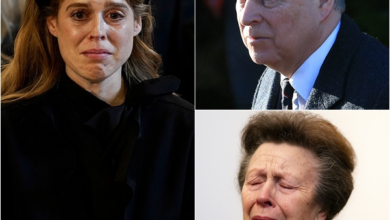
The Queen Saw Princess Diana Crying After Speaking to Charles — She Waited Before Responding

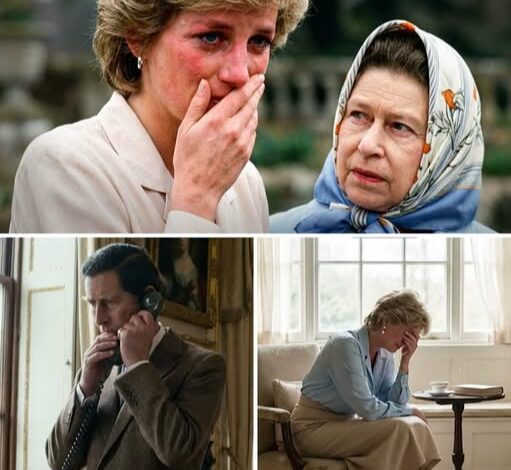
The Queen Saw Princess Diana Crying After Speaking to Charles — She Waited Before Response
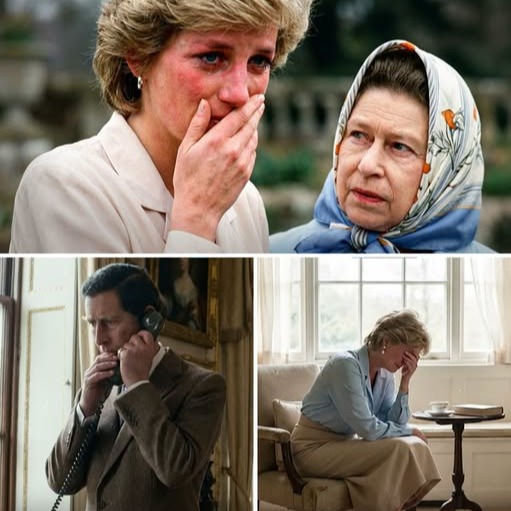
The Queen Saw Princess Diana Crying After Speaking to Charles — She Waited Before Responding
In the summer of 1991, Charles told Diana their marriage had been a mistake. She walked out of his study and down the corridor until she found an empty room. For the first time in a long time, she couldn’t hold it together. The Queen was passing in the corridor. She saw her through the open door. She stopped. She went in. What she said next stayed with Diana for the rest of her life.
Diana had been awake since 6:00. The light through the curtains was different from London light, cleaner. She had been standing at the window for a while when Harry appeared in the doorway. Still in his pyjamas, hair in several directions at once.
“Is there breakfast?” he said.
“There’s always breakfast,” she said.
“I want the eggs.”
“Then you’ll have the eggs.”
He disappeared. She heard him in the corridor, the particular sound of Harry moving through a house, which was different from the sound of anyone else moving through a house. William appeared a moment later. Dressed already, a book under his arm, the expression of someone who has been up for an hour and considers this the correct amount.
“Harry says he wants eggs,” William said.
“I know.”
“He always wants eggs.”
“I know that, too.”
He looked at her for a moment, that assessing look he sometimes had.
“Are you all right?” he said.
“I’m fine,” she said. “Go and eat.”
He went. She stood at the window a moment longer. The hills were the same hills they always were. Before breakfast, she went to find Charles. Nothing particular, just to call him to the table. The boys were already downstairs. She opened the door to his study. He was on the phone. He saw her and put the receiver down. Not slowly, quickly, the particular movement of someone who has been caught at something and has decided the best response is to act as though there is nothing to be caught at.
A silence. They looked at each other. It wasn’t the first time something had ended too quickly. There had been other moments, other rooms, other conversations that stopped when she entered. Not always a phone, sometimes just a look, a shift in tone. The way a sentence would change direction halfway through. She had learned over time not to react in the moment, to notice, to store it, to wait. Because asking too quickly never worked. It only made the thing disappear faster. But something in her decided in that silence that this time was different. She closed the door behind her.
“Was that her?” she said.
Not loud, not with the trembling edge of someone who has been holding something in too long, just a question, direct, the kind she had learned over years of not asking to finally ask. Charles set down his pen.
“Diana.”
“Yesterday evening,” she said, “when I came in, was that her?”
He was quiet for a moment.
“I don’t think this is—”
“I’m asking you a question,” she said, “a simple one.”
He looked at her. Something moved across his face, not guilt exactly, not the expression of someone caught, more the expression of someone who has been managing a situation for a long time and is tired of managing it. The particular exhaustion of a person who has been careful for years and has decided in this moment to stop being careful.
“Yes,” he said.
The word sat in the room. Diana looked at him. She had known. Of course she had known. She had known since before the wedding, had carried it since then, had watched it continue through everything. But knowing and hearing were different things. They had always been different things.
“I see,” she said.
She hadn’t planned to say what she said next. She had planned to ask something else, something about what this meant, about where they went from here, about the boys, something practical, something that could be answered. Instead, she said:
“Do you love her?”
Charles was very still.
“Diana.”
“Do you love her?”
Not a question anymore. He looked at her for a long moment and then he said it. Not about Camilla, about them.
“I think we both know,” he said, “that this marriage was not—” He paused, chose the word, “was not what either of us hoped it would be.”
The room was very quiet. Diana looked at her husband. She had asked about Camilla. He had answered about the marriage. She understood in that moment exactly what he was doing, closing the larger door because he couldn’t close the smaller one. Answering the question he could manage instead of the one she had asked. She understood it. It didn’t make it less of a verdict.
“I see,” she said again.
She turned. She walked out. A member of staff passed her in the corridor, stepped aside, lowered his eyes.
“Ma’am.”
She nodded. Harry appeared at the far end, 7 years old, at full speed. He stopped when he saw her.
“Mummy. Do you want to see what I found?”
She looked at him.
“What did you find?” she said.
“A frog, a really big one. William says it’s not that big, but it is.”
She looked at him for a moment.
“Where is it now?”
“By the stream. Are you coming?”
She almost said yes. Something in her face, just for a second, almost arrived at yes.
“In a little while,” she said, “go and make sure it’s still there.”
He ran back the way he came. She stood in the corridor for a moment. Then she walked until she found an empty room, a small sitting room, a window, a chair no one sat in. She sat in it. She didn’t intend to cry. She had learned over the years a particular management of herself, the way to feel something fully without letting it arrive on her face, the way to take a blow and stay standing. She had needed that skill more times than she could count. It didn’t work this time. Not completely. By the time she heard the door, her face was composed, entirely correct. She thought it was a member of staff, someone who would back out quietly and pretend they hadn’t seen. She straightened, prepared the version of herself that was fine.
She looked up. It was the Queen. A silence passed between them. The Queen looked at her. Not quickly, the way people look when they are trying not to look properly, taking in the red eyes, the particular stillness of someone who has just stopped crying and is holding herself carefully together. She didn’t look away. She didn’t pretend she hadn’t seen. Diana stood up.
“I’m sorry,” she said. “I’ll—”
“Sit down,” the Queen said.
Diana sat down. The Queen did not leave. She came into the room, not quickly, not with the purposeful movement of someone who has decided to intervene, just came in. Found the other chair. Sat down. Neither of them said anything for a moment. It was not an uncomfortable silence. It was the silence of someone who had decided to be in a room and was simply being in it without agenda, without the managed sympathy that Diana had learned to recognise and dread. Just a woman sitting. Diana hadn’t expected that. She hadn’t expected any of this. Diana waited for something, a question, a reprimand, a careful institutional response to an inconvenient situation.
“What did he say?” the Queen said.
Diana looked at her. She thought about the careful answer, the diplomatic version, the response that protected everyone.
“He said the marriage was a mistake,” she said, “not in those words, but that was what he said.”
The Queen was quiet.
“Not about Camilla,” Diana said, “he said it instead of talking about Camilla, which I think—” She stopped. “Which I think says everything.”
Silence. Outside, somewhere on the grounds, one of the boys could be heard, Harry, probably, the particular volume of him at 7 years old, a shout, then nothing.
“He has always,” the Queen said finally, “found it easier to talk about the container than the thing inside it.”
Diana looked at her. The Queen was looking at the window.
“When he was young,” she said, “he would argue about the rules of a thing rather than say what was actually upsetting him, every time.” A pause. “It took me years to understand what he was actually saying.”
She was quiet for a moment.
“I’m not sure I always understood in time.”
Diana said nothing. She was listening fully, in the way she listened when something real was being said. The Queen was not a woman who spoke like this, who said things like, “I’m not sure,” or acknowledged not understanding. This was not the public register. This was something else.
“He is not,” the Queen said carefully, “an easy person to be married to. I am aware of that.”
“Yes,” Diana said.
“I am also aware,” the Queen said, “that some of what he is, the difficulty of him, is not entirely his own making.”
She stopped. It was not a confession. It was not an apology. It was the careful language of a woman who had spent her entire life not saying things directly and was in this moment saying something as directly as she knew how. Diana understood what was underneath it. That the Queen knew, had always known that she was sitting in this chair because she had walked past a door and seen something she recognised, not just grief, but a particular grief. The grief of someone who had tried very hard to make something work and had been told quietly that it had never been going to.
“What will you do?” the Queen asked.
Diana thought about this.
“I don’t know yet,” she said. “I need to think.”
The Queen nodded.
“The boys,” Diana said. “Whatever happens, the boys.”
“Yes,” the Queen said, simply. As if this required no elaboration.
They sat for a moment longer. Then the Queen stood. She didn’t say, “I’m sorry.” She didn’t say, “It will be all right.” She was not a woman who said those things and she did not say them now. What she said at the door was:
“You are stronger than he knows.”
She left. Diana sat alone in the small sitting room. Outside, the hills were the same. Harry could still be heard somewhere below, closer now, the sound of him finding something interesting. She sat with what the Queen had said. Not the last thing, though she would think about that too, later, many times. But the thing before it, the acknowledgement that some of what Charles was had not been entirely his own making. The careful language of a woman admitting, without admitting, that she understood the cost of what had been asked of Diana. It was not an apology. But it was as close as the Queen would ever come to one. And Diana, who had spent years learning to hear what people meant rather than what they said, heard it.
Diana didn’t know where the Queen had gone after leaving her room. She didn’t think about it. She stayed where she was for a while. Not moving. Not trying to make sense of it too quickly. It wasn’t what had been said that stayed with her first. It was the fact that it had been said at all. The Queen was not a woman who spoke like that. Not in rooms like this. Not to her. And yet she had. Not to defend Charles. Not to dismiss what had happened. But to place it somewhere. To acknowledge it without naming it fully. Diana understood that language. She had learned to. The space between what people said and what they meant. She sat with that for a moment longer. And felt not better, not resolved. But steadier.
Then she stood up. She went to find her sons.
The Queen left Diana’s room and walked back down the corridor. She moved at her usual pace, unhurried, looking ahead, the particular posture of someone who has somewhere to be and intends to get there. She stopped outside Charles’s study. She knocked once. She went in.
A few minutes later she came out. Her face was exactly as it always was. She continued down the corridor.
A member of staff who was passing noticed the door was not quite closed. He didn’t intend to look. But he saw Charles through the gap. He was sitting at his desk. Not reading. Not writing. Just sitting. His hands in front of him. Still. The stillness of someone who has just been told something they already knew and had been hoping somehow not to hear confirmed.
A member of the household staff at Balmoral was asked about that summer once, long after.
“I didn’t hear the conversation,” she said. “I want to be clear about that. But I saw Her Majesty go into that room and I saw her come out. And I saw Diana 20 minutes later coming down the corridor towards the garden.”
“How did she seem?” she was asked.
She thought about it.
“She stopped when she saw me,” she said. “Smiled. A real smile. Not the official one. Then asked how I was. Whether I’d had a good morning.” A pause. “I’d worked in that house for six years. Nobody had ever asked me that before.”
She was quiet for a moment.
“A year later they announced the separation. Then the divorce. Then everything that followed. I thought about that summer a lot after that. About that corridor. That room. A lot happened between that morning and the end. A lot was said publicly. Interviews, books, statements. But I always thought the real thing happened quietly in a small room with no cameras.”
Another pause.
“Her eyes were red. You could see it. But she smiled like nothing had happened. And she asked me how I was. How my day was going. That was just who she was.”